Featured in the Fall 2025 issue of Wander Magazine
by Diana Ballon
“Eagle,” my husband called out to the other avid birder on our small ship cruise in the Inner Hebrides. “Come quick.”
Out raced Penny, binoculars slung over her neck, desperate to add the white-tailed eagle to her life list. This eagle is so massive it’s often described as a “flying door” with outstretched wings as broad as planks.
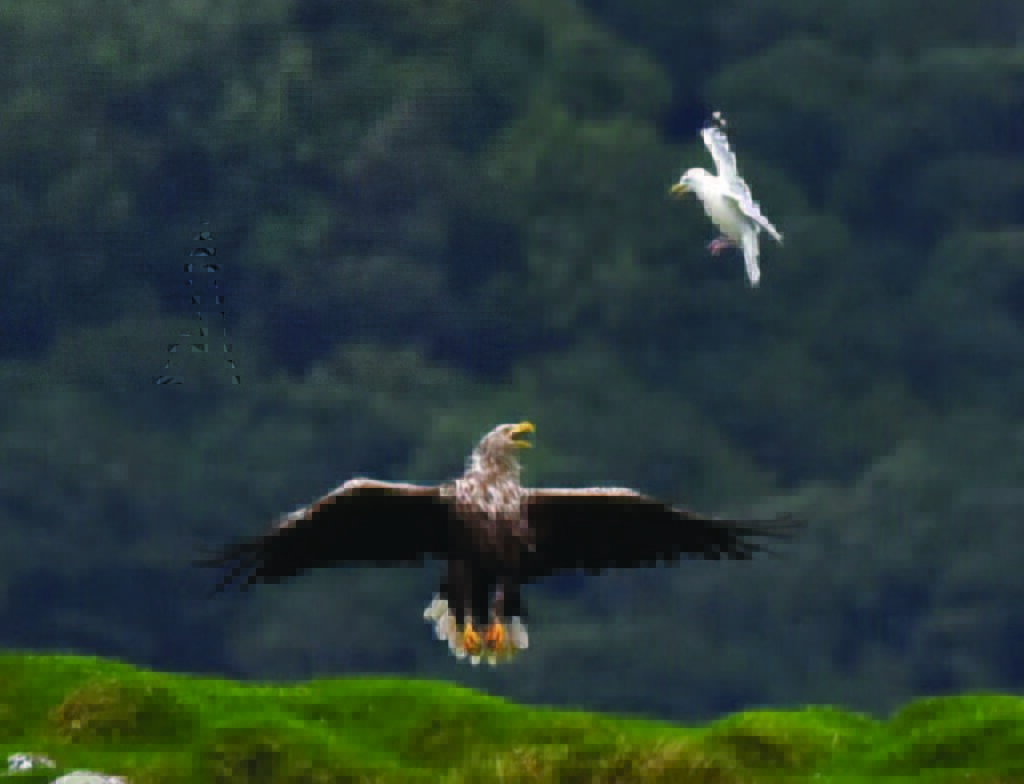
But alas, this sighting was not meant to be. As any wildlife enthusiast knows, size doesn’t always matter, and animals can appear—and vanish—in an instant.
As I was to discover, the same goes for the rain. I had booked a six-night cruise aboard St. Hilda Sea Adventures’ 72-foot Gemini Explorer in the Hebrides, knowing full well what Scottish forecasts would predict: rain and more rain. One day alone promised 43 mm.
I packed accordingly: rain pants, rain jacket, hiking boots and a dry pair of shoes for the ship. Isn’t that what they mean by “dress for success”?
The forecast wasn’t wrong. We did get plenty of rain. But there is a bright side. Cooler weather often brings dolphins and whales closer to the surface. Rain also enhances the landscape—moody skies, low-hanging mist and saturated greens and purples, with lush grass and wild heather blanketing this undulating terrain.
Wildlife guide Mike Bagshaw describes the Hebrides on the west coast of Scotland as one of the world’s truly wonderful places. Spanning more than 3,000 kilometres of coastline, there are about 50 inhabited islands in the Hebrides (far more if you include uninhabited islands), which are divided into Outer and Inner groups.
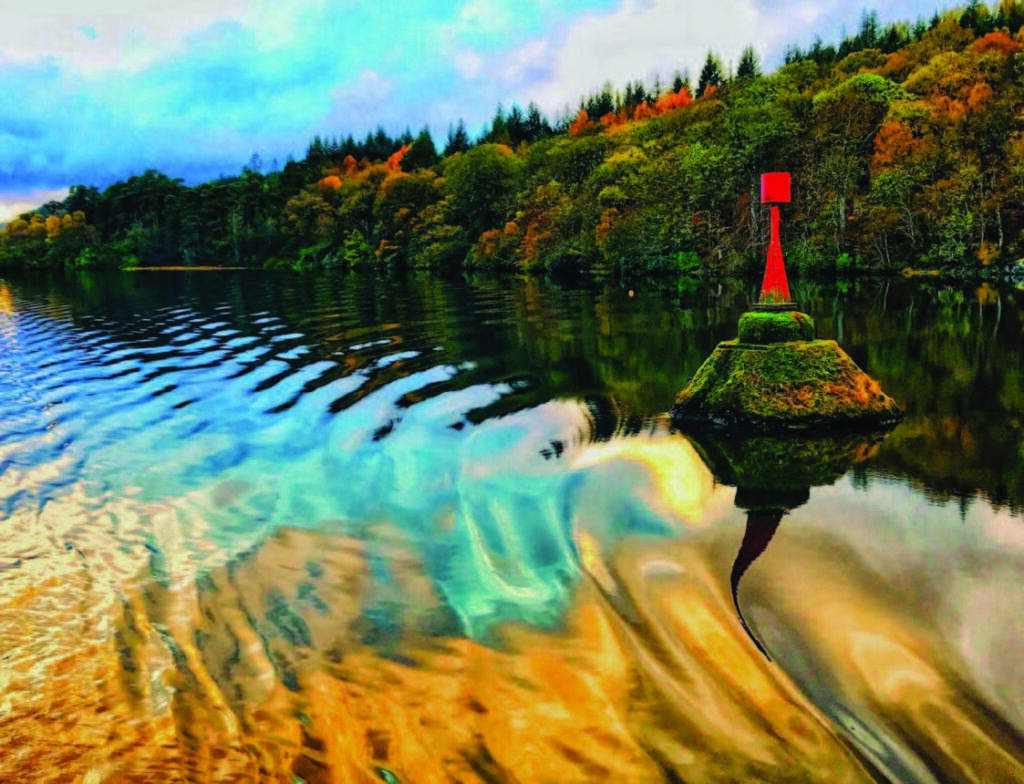
Our “Isle of Mull and Small Isles Explorer” itinerary with St. Hilda Sea Adventures would take us through the Inner Hebrides aboard a converted 1970s lifeboat. I wasn’t looking for shuffleboard and formal dinners aboard. Fleece and Gore-Tex are more my style. Still, I wondered what a 72-foot ship would feel like on the open sea. A quick Google reassured me: the Gemini Explorer is almost twice the size of the S.S. Minnow that Gilligan was on.
I booked it. My husband and I flew non-stop from Toronto to Glasgow, then took a scenic three-hour train to Oban, where we spent the night before boarding the ship at nearby Duffstaffnage Marina.
We nervously eyed our fellow passengers on the pier, and they did the same. But within minutes of boarding, we were chatting and laughing. Our group included three Brits and an American—all retired with careers that included vicar, banker, speech therapist, and language teacher, fodder for some interesting conversations. Captain Christophe Linsale, the ship’s co-owner, welcomed us aboard, and we were shown to our cabins. Ours was small, but perfectly outfitted, with two single berths and an en suite bathroom that included a colour-coded sign for an eight-step flushing procedure above the toilet. Nothing overlooked!
We then gathered in the “saloon,” our floating living room for the week, just as the aroma of baking filled the air. Chef Sophie Ferguson emerged with trays of homemade scones, served with jam, clotted cream, and, of course, a pot of tea. Captain Christophe briefed us about the trip before we tucked into the first of many brilliant meals: slow-cooked lamb shoulder with whipped feta, carrots and tabouli. Each day brought three delicious meals, with highlights like kedgeree, hake burgers, and prawns with orzo.
Between meals, we explored islands and scanned the sea for pelagic life. Baghaw, who guides twice-yearly wildlife tours with St. Hilda’s, notes that “20 species of whales and dolphins have been recorded in the Hebrides.” The Hebrides are also one of the best places in Europe to see basking sharks, and a popular destination for grey seals.
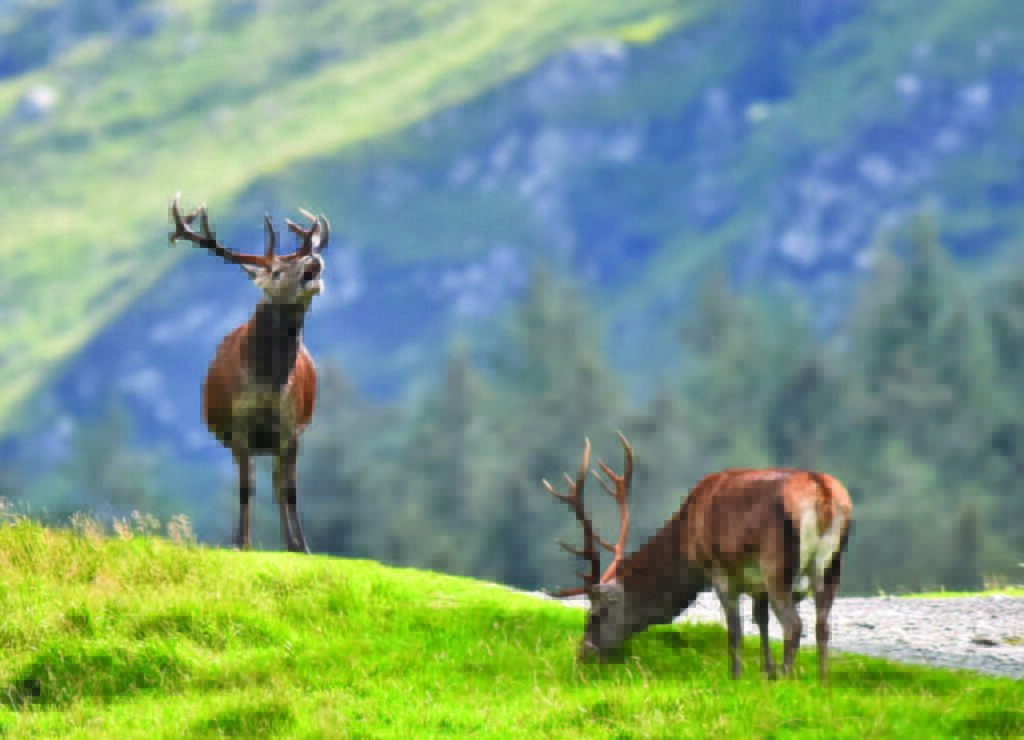
Though Mike wasn’t on our tour, and we didn’t see any mating elks (or red deer), which you can see in autumn, we had plenty of other sightings. Northern gannets plunged from the sky at breakneck speeds, their white bodies and black wings arrowing” into the sea. We also spotted razorbills, Manx shearwaters, Eurasian oyster catchers, kittiwakes, and more. Once, we even witnessed a minke whale’s dorsal fin slicing through the water. Another afternoon, two dolphins danced in the ship’s bow.
“They’re surfing,” Mike explained to me later in an interview. “The pressure wave keeps them buoyant, like a free ride.” They looked so joyful, I couldn’t help laughing out loud.
On land, daily excursions took us to Eigg, Rum, Mull and Skye, plus a stop on the remote Knoydart peninsula on the mainland, which is only accessible by boat or an arduous hike. I especially loved walking through temperate rain forest, with dense moss-draped trees in places like the Isle of Rum.
On Eigg, we walked along a single road that stretched across the island, past sheep, Highland cattle, stone walls, and traditional croft homes, with the jagged pitchstone ridge of Sgurr looming in the distance.
Eigg is often called one of the greenest islands in the world, both because of its colour, and because it is run entirely on renewable energy: by water, wind and solar power. Our taxi driver, Donald, a retired shepherd with a long beard and a rickety van, described the landscape on our 15-minute drive across the island.
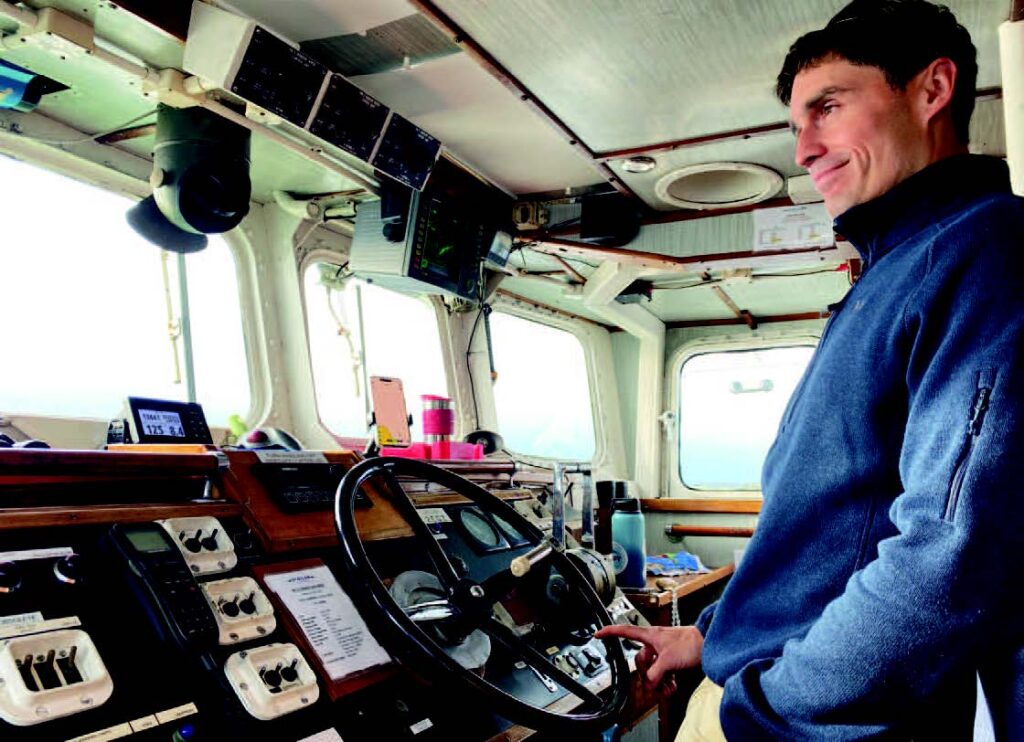
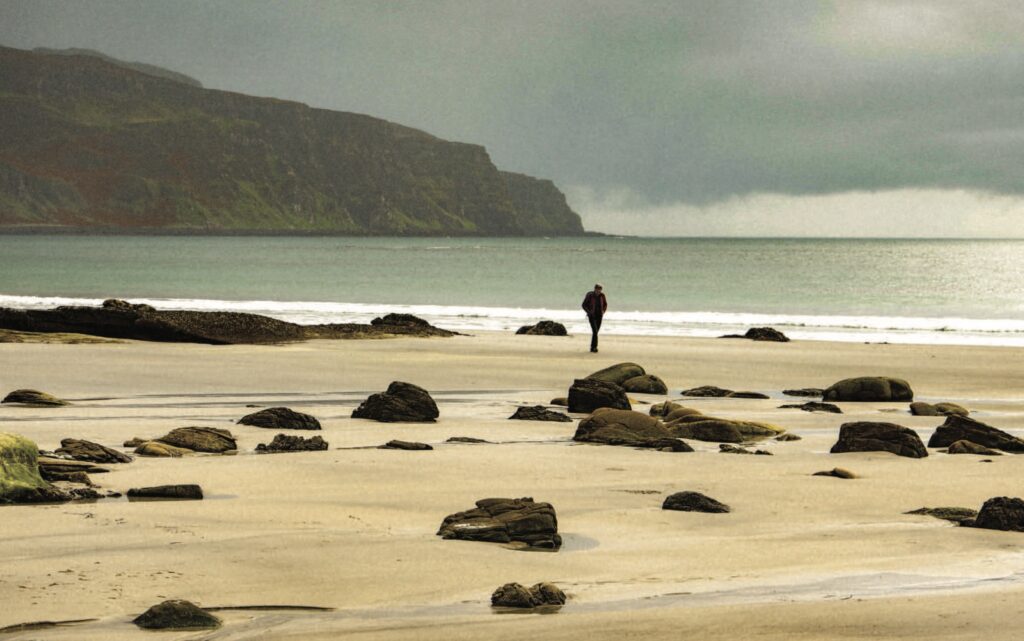
We then hiked to Singing Sands, a beach purported to sing when the quartz-filled grains rub underfoot. I asked a little boy heading back up the hill with his mother, “Did the beach sing?” “Nah,” he said flatly.
No matter. The deserted beach, flanked by moody clouds, was hauntingly beautiful. I regretted not bringing my bathing suit. On Mull, our final stop, we anchored near Tobermory, the island’s pretty capital. Taking a Zodiac ashore, we arrived at a scene that was something out of a storybook: brightly coloured buildings along its crescent-shaped harbour, its reds, yellows, pinks and blues reflected in the water.
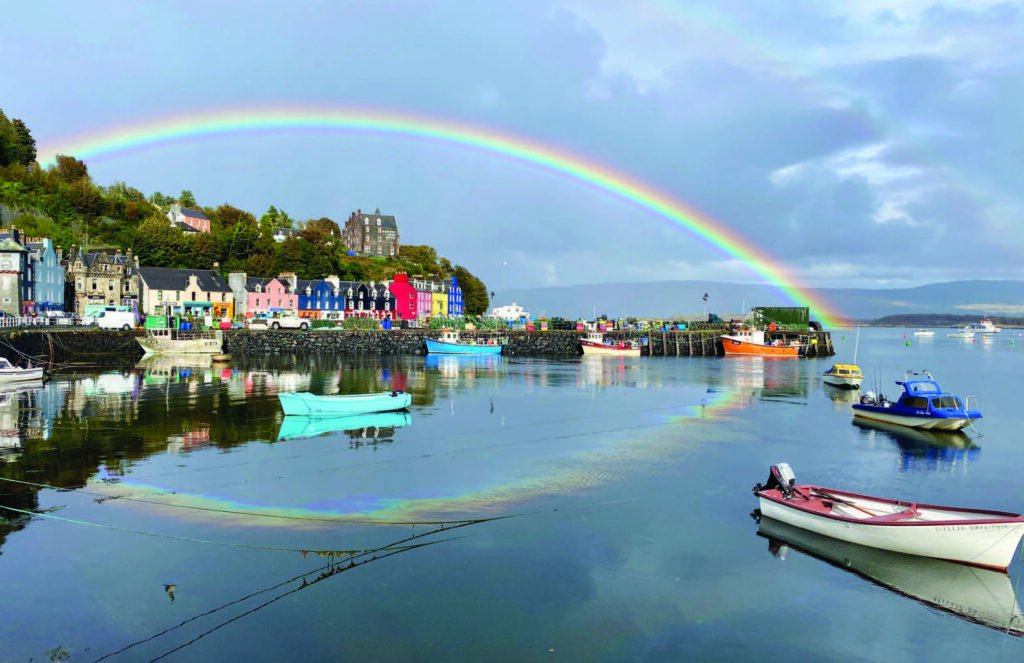
It was here we saw yet another rainbow, one of at least a dozen I had seen that week. This one formed a perfect oval crossing water and sky—another sign that rain, though often unwelcome, can bring its own treasures.
YOUR TURN
The Gemini Explorer is one of 4 vessels operated by St. Hilda Sea Adventures in the Hebrides. Pack for rain. Bring your binoculars, anti-nausea meds (waves can be big), and a spirit of adventure.