From Tallinn’s storybook spires to Riga’s elegant facades and the baroque charm of Vilnius, the Baltic capitals know how to enchant. But for Diana Ballon, the real discovery began when she explored the region by bike. Initially drawn by the promise of flat terrain, the Canadian journalist soon realised the Baltics offer so much more than flat-out fun. With its rich history and resilient people, her journey became an immersive exploration of the region’s heart, culture, and soul.
Published in the Fall 2025 issue of Signpost Magazine
Words by Diana Ballon
When I first read about the Baltics’ underrated and less touristed capital cities, I was intrigued. What I didn’t know at the time were the spaces in between — the dense forests, dunes, meadows and lakes, the national parks, and the quietly undulating paths and secondary roads that make Estonia, Latvia and Lithuania a natural paradise and a cyclist’s dream.
The cooler, more temperate climate of Baltic summers and the region’s well-maintained, designated cycling paths makes it a great place to cycle. So instead of arriving red-faced and breathless at the top of a steep incline, you can cycle leisurely, perhaps stopping to watch a stork feeding its baby or to take a photo at one of the many manors, castles, and old wooden churches.
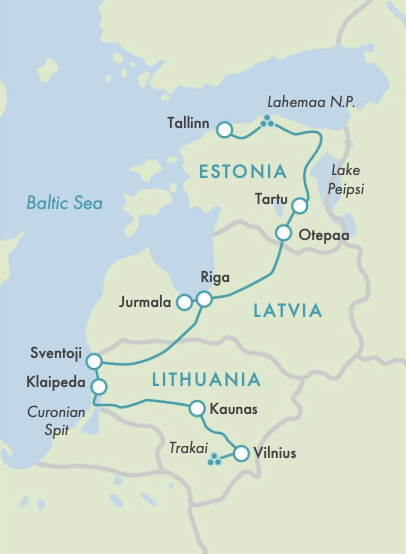
On Day 1 of our trip, my friend, Lisa Schmidt and I met the 14 other cyclists and our tour leader, Andrius Mazrimas in Tallinn. Although this was my fifth Exodus trip, these initial meetings are always a bit nerve-wracking. They’re like a loaded first date, because — regardless of the connection — you are still committed to spending many days together.
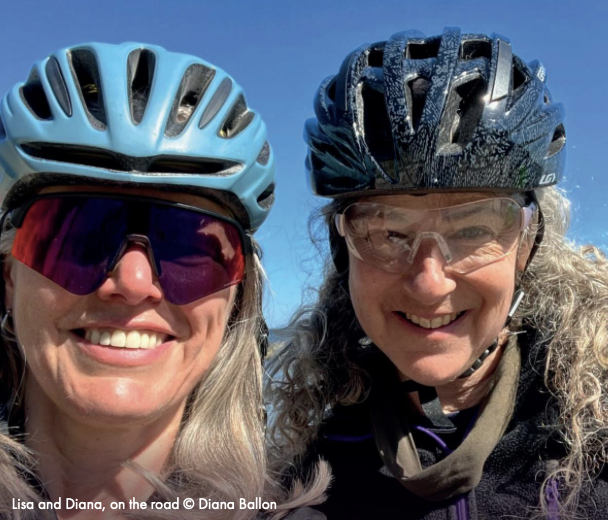
But as with all my cycling trips, I have never encountered a bad egg. Maybe it’s the choice of cycling that instantly binds a group as adventurers, both physically, and in a spirit of curiosity. We are all interested to learn more about local life and the history of a region, not to mention enjoying the outdoors, trying new foods, having conversations, and being comfortable with the unexpected.
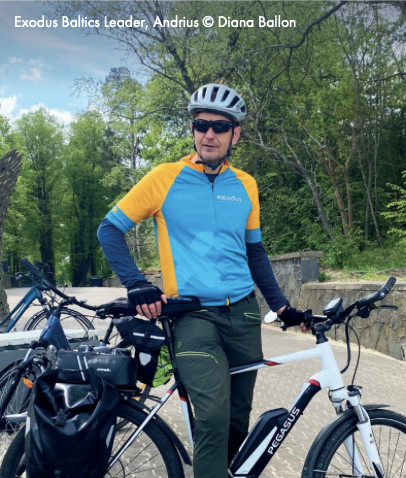
Our guide, Andrius, proved to be informative with a sardonic edge: always warm, funny, historically brilliant, and a conscientious leader. He is also a proud Lithuanian, and — as someone whose family emigrated from Lithuania to Montreal in the late 1800s — I was thrilled to get his insider knowledge.
Now that I’ve been back for over a month, I’ve been reflecting on my journey across the Baltics. Here are our highlights…
“Cycling through Lahemaa National Park was like following an endless ribbon of paved road that only bikes could travel on,” recalls Lisa, and I couldn’t agree more. Located on the northern coast of Estonia, over 747-square kilometers, it is one of the largest national parks in Europe, with designated cycling trails running through forest, over boardwalks and past bogs, ancient homesteads and sleepy fishing hamlets.
We started our day at the beautifully restored Vihula Manor, and later passed two more manors in the park. At one point, we stopped to marvel at massive erratic boulders brought here by glaciers from southern Finland.
Around midday, we made a pit stop al Kasmu Maritime Museum, where — as well as admiring their many 18th century artifacts — we had the pleasure of enjoying big tureens of salmon soup followed by cheesecake — hosted by the owners of the museum on their glassed-in veranda overlooking the Baltic Sea.
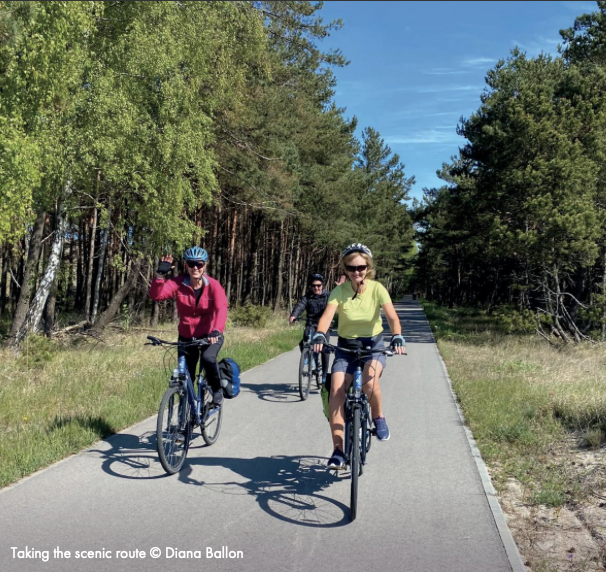
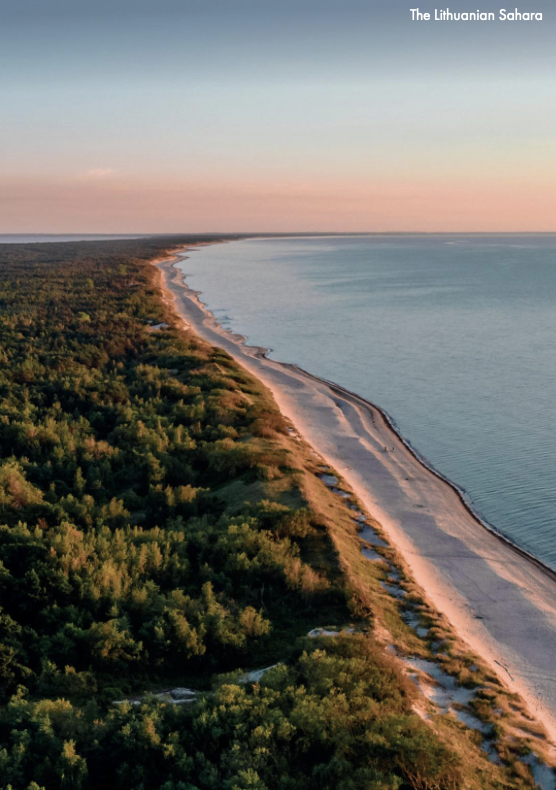
Another highlight was the short ferry and cycle lo the resort town of Nida, the starting point for our exploration of Lithuania’s Curonian Spit. The Spit, sometimes referred to as Lithuania’s Sahara, is a long, thin sand dune that runs next to the Baltic Sea. We continued on a paved path past wetlands and pine forest, with cormorants and herons, common cranes and other birds flying overhead.
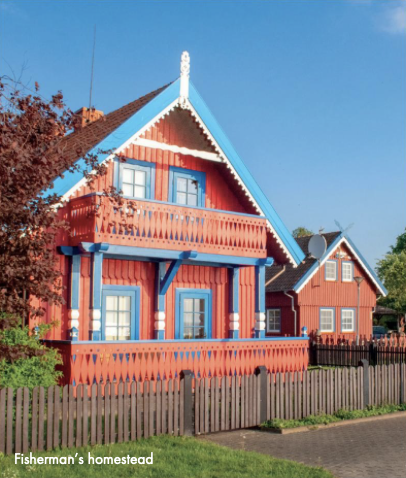
At lunchtime, the group pedaled up to a fisherman’s homestead, where Andrius had pre-ordered smoked fish, tender mackerel, sea perch and sander, produced on platters from a food truck and supplemented with vegetables and fresh bread he had bought from a local market. Seated at picnic tables on site, one in the shape of a boat, with no one else in sight, it felt like a feast.
Another day, Andrius surprised us with a visit to the Hill of Crosses, a sacred site in northern Lithuania. On this knoll, thousands of crosses are densely packed on a hill, some almost toppling over each other — many with rosary beads and crucifixes looped overlap — placed there as memorials, as symbols of hope, or as symbols of gratitude or requests made to God.
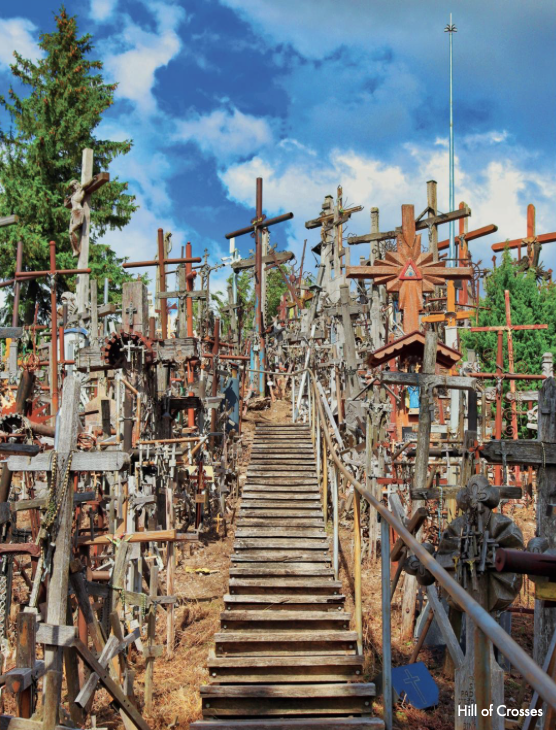
Thousands of crosses were placed at the Hill of Crosses from the 18th century through to the 1970s, but many were bulldozed by the Soviets during their occupation. The ongoing restoration of these crosses shows the devotion and strong traditions of the Baltic people. As a writer, I was struck by how inadequate words felt to describe the setting.
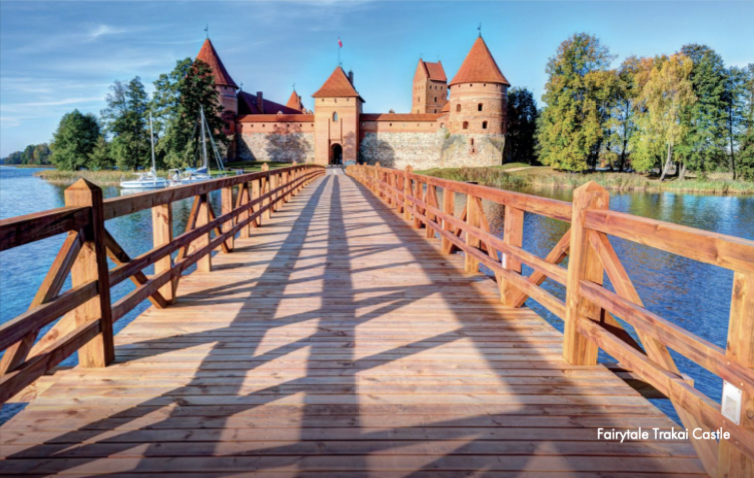
On our final afternoon, instead of touring the inside of Trakai Island Castle, we boarded a boat on Lake Galve, with Andrius clutching bags of ice, wine glasses and bottles of Prosecco to toast the end of our trip!”
We then had dinner at a cozy local restaurant in Vilnius that night. Some of us even danced a jig, to the accompaniment of an accordion, hand clapping and fiddle. It was a perfect send-off to a magical trip.
The Baltics, your way
Diana traveled on our popular 11 day cycling tour
Cycle the Baltics, exodustravels.com/trip/mvb