With 1,200 islands in Croatia, which will you choose?
Published on JourneyWoman on November 13, 2025
by Diana Ballon
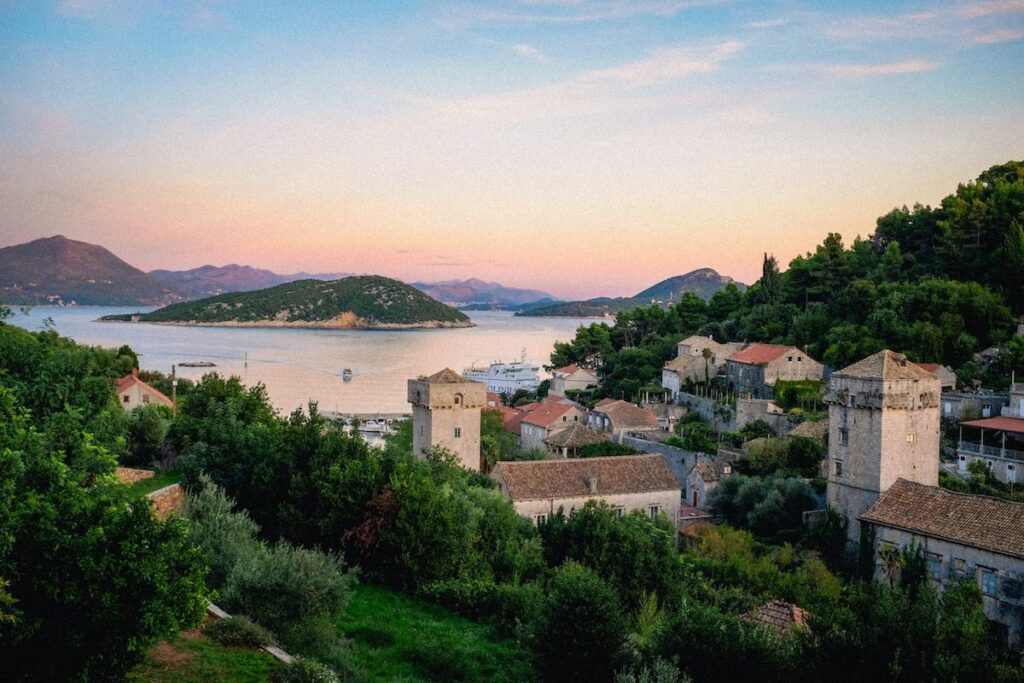
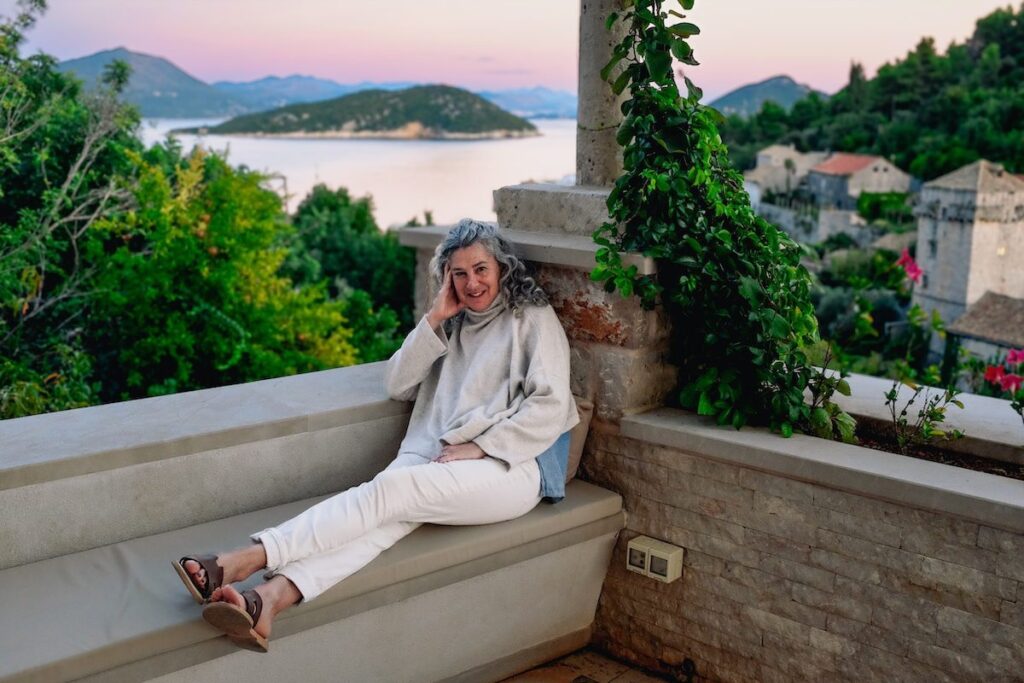
Featured image: Views from the verandah where Diana Ballon was staying on Sipan, after a Croatia island-hopping tour with Explore! | Photo by Diana Ballon
In Alternate Side, Anna Quindlen writes that “people go through life thinking they’re making decisions, when they’re really just making plans.” Maybe that’s true. But if there’s one thing that felt like a real decision — not just another “entry on a to-do list”— it was saying yes to an island-hopping tour in Croatia with Explore!.
Croatia’s Adriatic coast is scattered with about 1,200 islands (only about 45 inhabited) — each with its own story, history, personality and rhythm. I joined a curated adventure with Explore to see three islands, and then ventured with my husband to two more, creating the perfect slow-travel introduction to island life here. With so many islands to choose from, I’ve created a personality profile for each island to help you to decide where to go on your Croatian adventure.
Recurring patterns along the Dalmatian coast
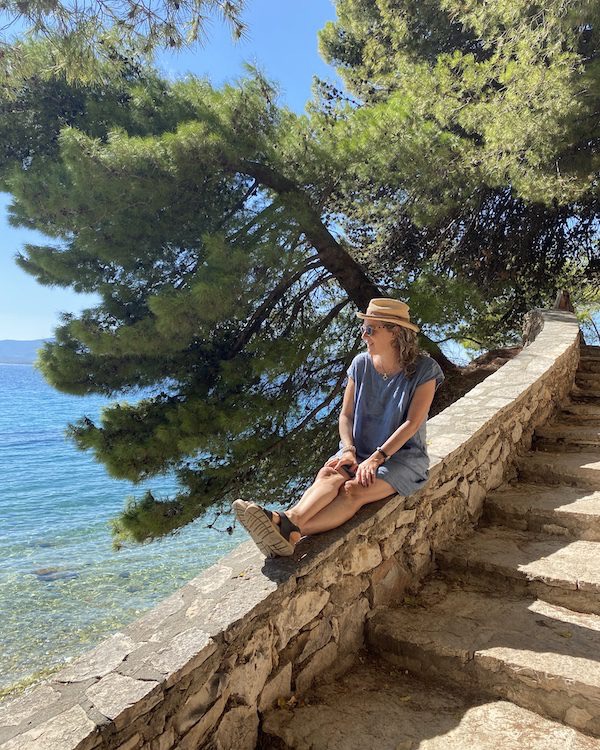
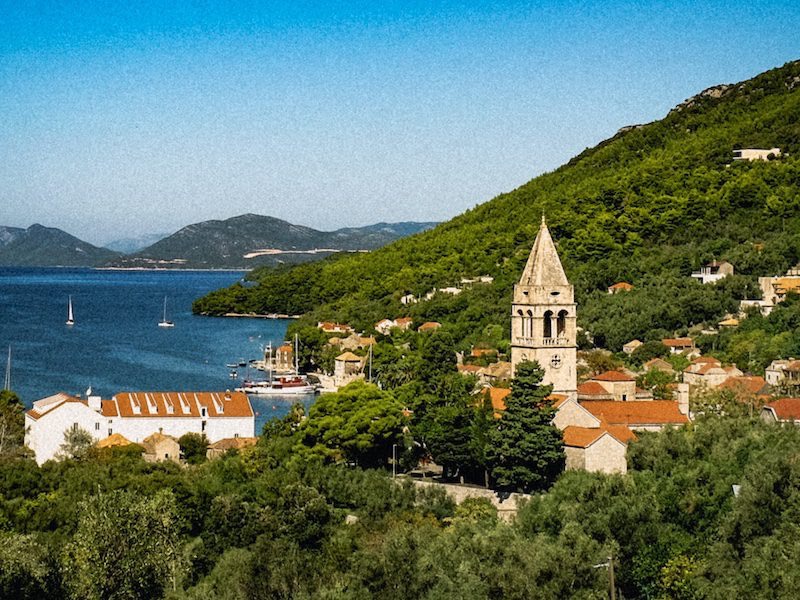
Many Croatian islands share distinct features. Rugged limestone cliffs soar dramatically into the sea. Craggy rocks carve out hidden coves, forming private little pebble beaches perfect for swimming. And inland, the terrain is mostly mountainous, with olive groves and pine forests. Villages scattered along the coast are typically formed from light or beige-coloured stone with red terracotta roofs and windy, narrow streets.
The “Splitting” point
My trip started in Split, Croatia’s second-largest city and a main hub for exploring some of the iconic Croatian islands that lie between Split and Dubrovnik. We are a motley crew— 12 of us ranging in age from about 40 to 70, and hailing from Europe, Canada, the UK and New Zealand. With a mix of couples, one group and a few solo travellers, I felt confident that friendships would develop.
At our welcome dinner near the hotel, our guide Vedran Forko — a former competitive white-water kayaker, and all-around adventurer — greeted us warmly. “Zivjeli!” he toasted, as we raised our glasses. “It’s all about making friends and travelling together.”
Brac: The adventurer
Just an hour by fast ferry ride from Split, Brac is Croatia’s third largest island and the first one on our itinerary. As we approach, I can see its dark pine forests and rugged coastline, with the 778-metre-high peak of Vidova Gora, the highest point of all Croatian islands, piercing the sky.
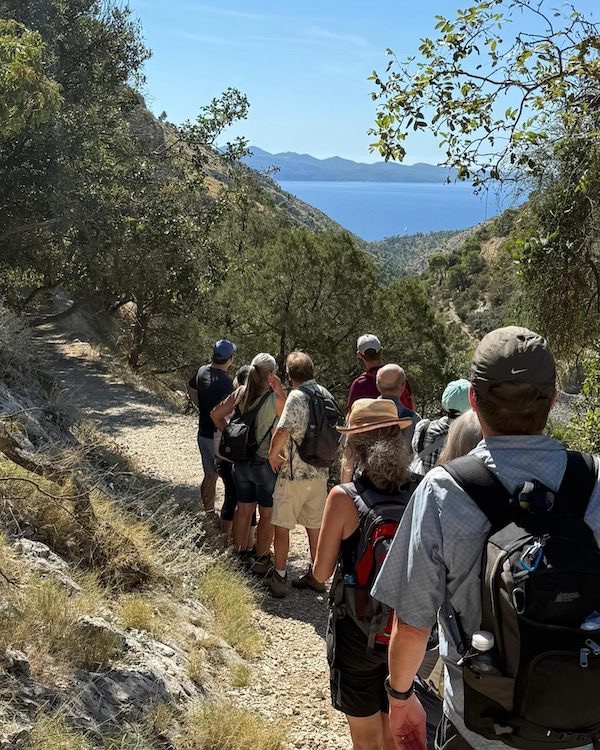
Our first hike on Brac has us walking along a rocky, uneven path to the remote Blaca Hermitage, a 16th-century monastery built into the wall of a canyon. Its isolation is astonishing, particularly when imagining the Glagolitic priests who lived there over several centuries. Now a museum, the guide shows us the library filled with some 8,000 books, a classroom used for local village children, and even a grand piano, which apparently 12 men carried over eight hours, drinking 57 litres of wine from a massive goat bladder in the process.
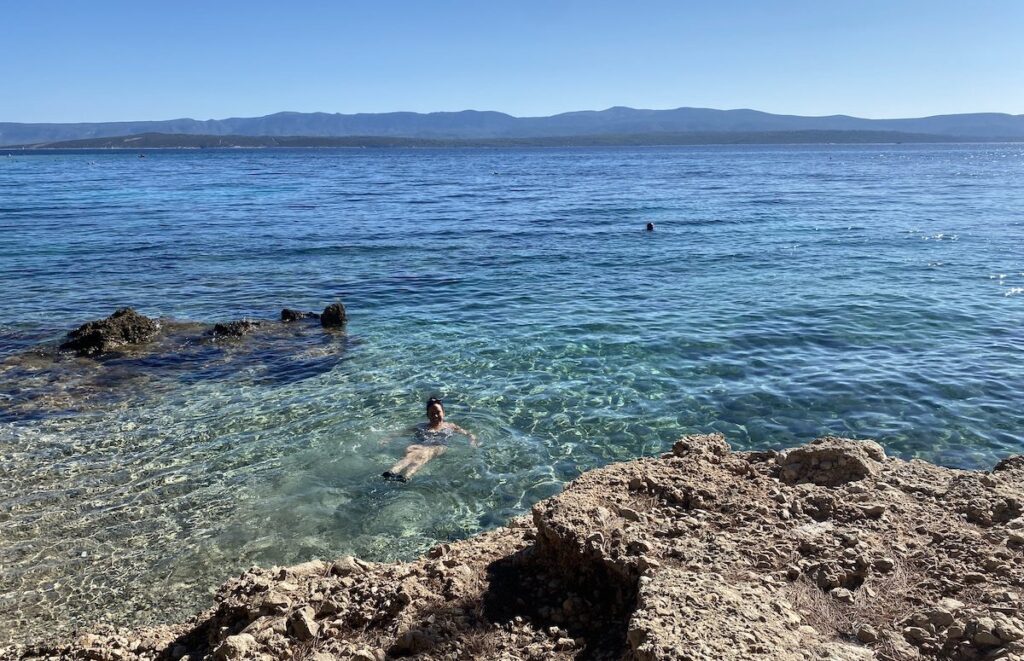
Later, we settle at the buzzing Blue Sun Hotel Elaphusa, a large, four-star resort in the small town of Bol on the southern coast of the island. With its location fronting the beach, it is perfect for water-based activities. My new friend Kate and I swim off rocky outcrops and wander to the famed Zlatni Rat (Golden Horn) Beach, a horn-shaped spit that apparently changes shape with the wind and tide.
That night, we have a group dinner at Ranc, a family-run konoba (or restaurant) where we feast on platters of veal and lamb, accompanied by potatoes and carrots, which had been roasted in the traditional peka method of slow cooking under a big bell-shaped cast iron lid in the coals of a stone hearth. The tender meat, with its smoky flavours, pairs perfectly with homemade wine, which we enjoy at long wooden tables under grapevine canopies.
Korcula: Refined and old world
Next we visit Korcula, this time with a hike in Kocje Nature Park, a lush forest that feels like a rainforest. We duck under a thick canopy of oak and other dense tree cover, with moss-covered boulders and ivy hanging down from the trees, quite unlike the otherwise arid Dalmatian coast. Vedran tells us a local legend of fairies living in this enchanted forest: in the misty stillness, it almost seems possible.
Lunch is at Eko Škoj, a family-run eco farm famous for its olive oil. We sample fig, pomegranate, carob and elderflower liqueurs and then sit down to a locally sourced vegetarian feast. Dishes like green pea with almond tapenade, goat cheese with olives and sundried tomatoes, and grilled polenta with paprika sauce are simple, but delicious.
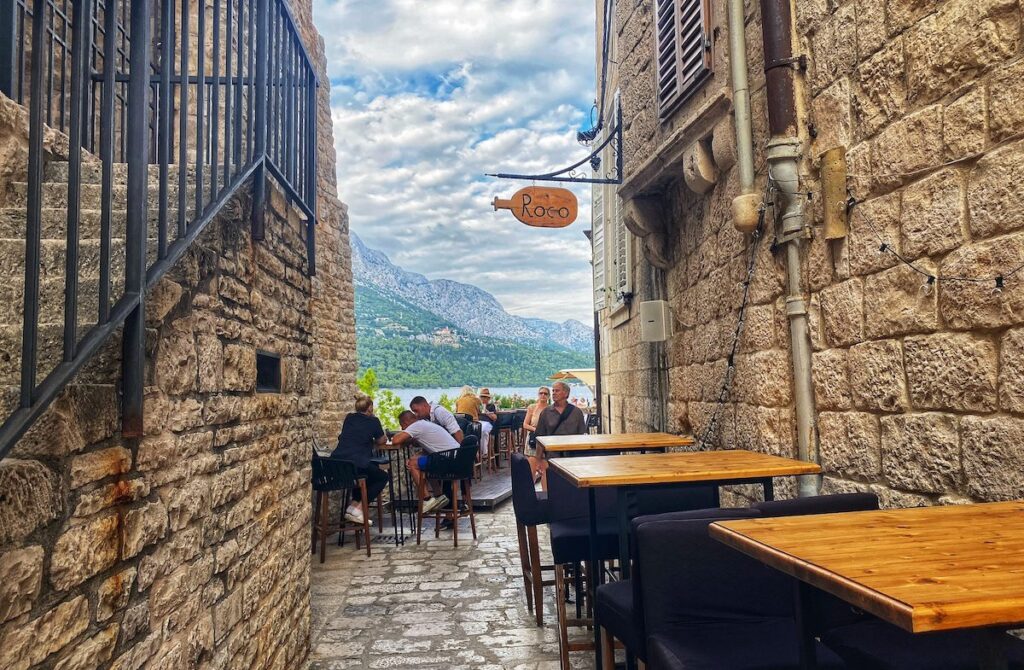
Later we visit Korcula’s Old Town, which is often referred to as a “mini Dubrovnik” because of its Venetian-style architecture, medieval charm and the fortified wall that surrounds it. Its streets are laid out like a fishbone, with narrow alleys curving outwards from the main “spine,” a medieval design allowing for cool breezes to flow through the streets in summer, and irregular paths to confuse potential invaders.
In Korcula, I enjoy a glass of local Grk wine on a rooftop terrace at Massimo Cocktail Bar, at the top of a 15th-century defence tower, which we reach by climbing a wooden ladder through a hole in the ceiling. Our drinks arrive by pulley, and the views of rooftops and the sparkling Adriatic are mesmerizing.
Along with wine making, Korcula is also known for a dramatic sword dance (Moreška) that continues to be performed and is also famous for being the birthplace of Marco Polo.
Mljet: Nature lover
A short ferry ride from Korcula brings us to Mljet, known as the “green island,” for its dense Mediterranean forests, specifically Aleppo pine and holm oak, with the bottom third of the island a protected national park, where we were headed for the afternoon.
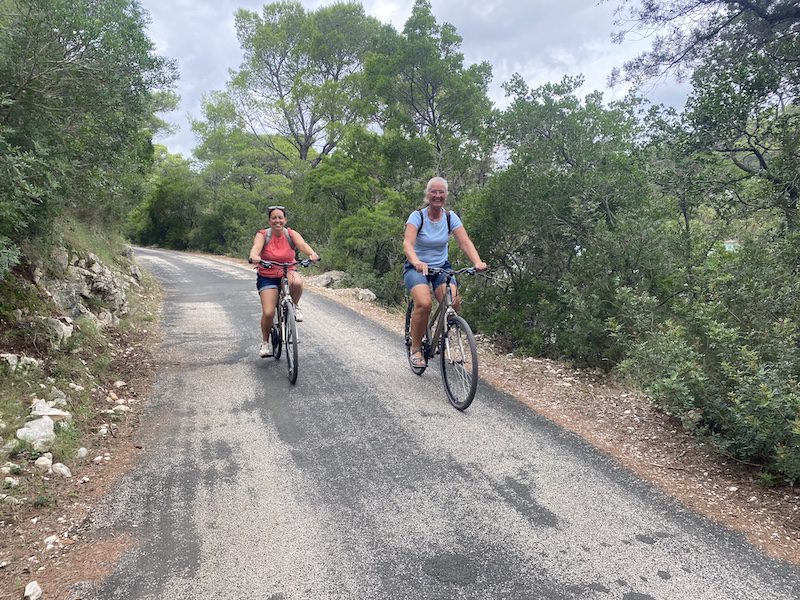
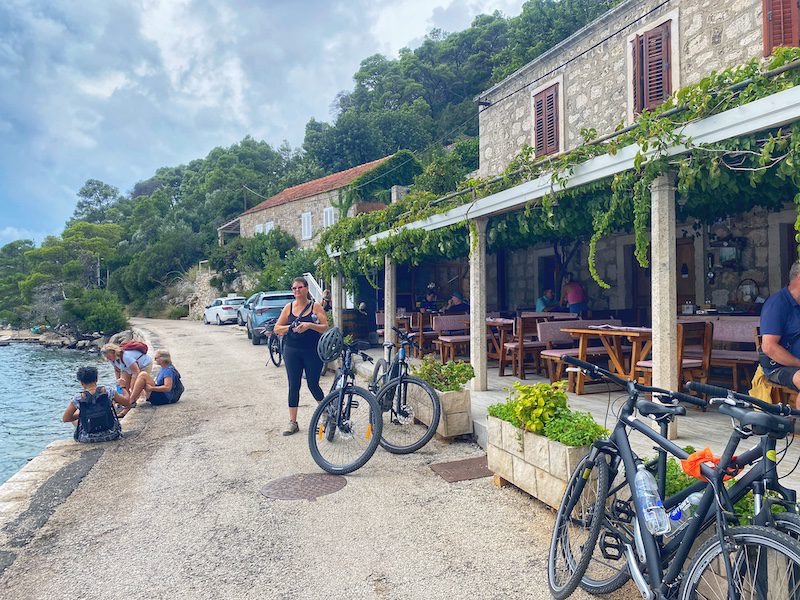
About a 25-minute walk from the port of Pomena, we arrived at the edge of two saltwater lakes, and rented bikes nearby to cycle the approximately eight km circumference of its larger lake.
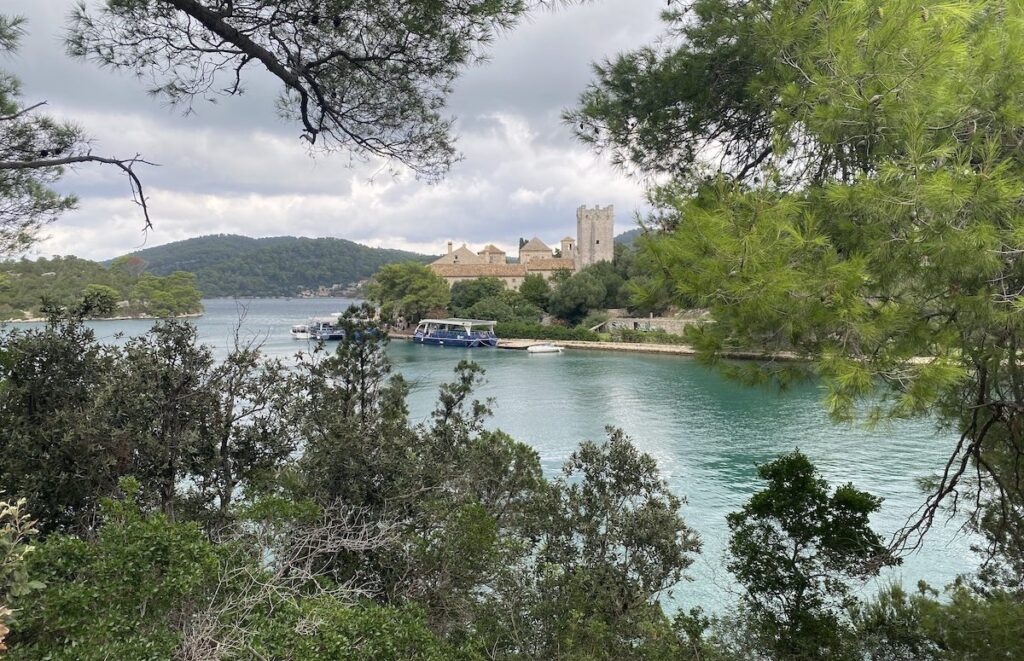
This wide coastal path is mostly flat, making it easy to traverse. And with the route shaded by pine and oak trees, with openings looking out to the turquoise lake, it’s a serene and calm place to while away a couple of hours. We cycle the route twice, then stop for a leisurely lunch at the lakeside restaurant Konoba Mali Raj before taking a short ferry ride to the island of St. Mary, where we have a quick visit to the 12th-century Benedictine monastery.
If we had had more time, I would have loved to stay overnight at one of the eco-lodges or guesthouses on the island, leaving more time for hiking and mountain biking.
Šipan: Gentle soul
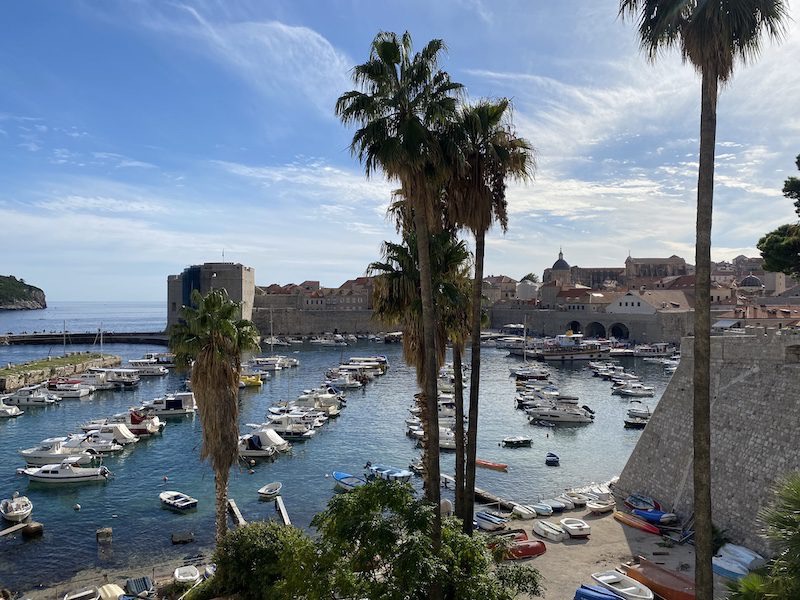
When our trip with Explore ends in the city of Dubrovnik, it’s the perfect launchpad for my husband and me to then visit Šipan, the largest of the three inhabited Elaphiti islands, located just over an hour away by ferry.
At the end of September, Šipan feels surprisingly off the beaten path for being so close to the touristed city of Dubrovnik. Once a destination for wealthy families to escape Dubrovnik, some of the palaces established by the aristocracy still remain. But the vibe here is laid back, with just one main hotel on the island, along with some guesthouses, villas and restaurants, and fewer than 500 locals.
We stay in the village of Sudurad at the serene Villa Ljubica, a beautifully restored stone house originally bought by the family in the 1920s. With the son arriving to pick us up at the port, and mother, child and wife there to greet us at the door, the tone was set for our visit: a warm inviting family villa where no ask was too much. They welcome us with a lavish meal out on their terrace with local wine, charcuterie, cheeses, salads, dessert and stunning sea views.
The next day, after an elaborate breakfast featuring bitter orange marmalade from the island, homemade granola, fresh banana bread and other delicacies, we walk the five kilometres north to its second village, Sipanska Luka. The path winds past the occasional honey-coloured stone house, olive groves and vineyards.
Arriving at the almost deserted Prijezba Beach, we dip into the crystal-clear water for a swim, and then sit under a bamboo awning to enjoy a Karlovacko draft beer. As “I Believe in Miracles” played over the loudspeaker, a sense of ease washes over me.
Lopud: The free spirit
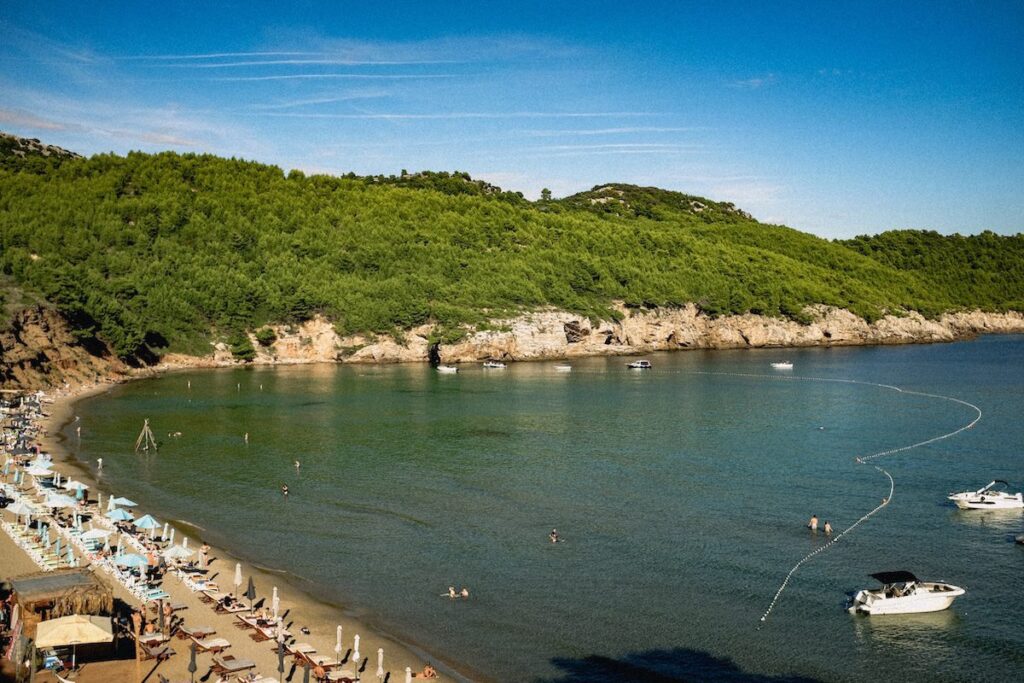
The next day, we spend an afternoon on Lopud, another Elaphiti island about 15 minutes by ferry from Sipan. Like its neighbour, Lopud was also once a retreat for wealthy Dubrovnik elites. Today, the island has a laid-back, artsy vibe combined with some old-world charm. With no cars on the island, we enjoyed leisurely strolling along Lopud’s pretty harbour village lined with boutiques and restaurants. We then followed a quiet woodland path to Šunj Beach on the other side of the island — one of the rare sandy beaches in Croatia.
After a swim, we saw some movement at the top of a cliff at the end of the beach. After climbing the stairs, we are rewarded with a sprawling family-run restaurant, Rajski Kutak Bindo, with hammocks, canopied tables, and a view that felt… endless. It was the last day the restaurant was open for the season, so we were almost alone as we savoured a plate of grilled fish and a glass of wine before heading back.
Back on Šipan for our final evening, we dine at Konoba Tri Sestre (Three Sisters). There, my husband enjoyed wild boar, and I savoured a generous plate of seared tuna, and joined in some friendly conversations with other diners.
The next morning, we said our heartfelt goodbyes to our Croatian family friends before heading back to Dubrovnik.
It was the end of my five-island adventure, but I return home with memories of simple feasts, a relaxed pace of living, and swimming in hidden sunlit coves.
If you go to the Croatian islands
Croatian ferries are inexpensive and well run. Check the schedules here.
Although most places on the islands accept credit cards, some small family-run restaurants, markets and attractions accept only cash.
Interested in joining this Croatian Island-Hopping tour with Explore!? Learn more here!
Disclaimer: Diana was a guest of Explore! but extended her stay in Croatia at her own expense. She was not compensated for her time spent researching, travelling and writing this feature, nor was JourneyWoman for publishing it. In addition, the host organizations did not review this article before it was published, a practice that allows the writer to express her perspective with integrity and candour.